
The Adinkra Symbol — Funtunfunefu-Denkyemfunefu
SPS has adopted Funtunfunefu-Denkyemfunefu, an Adinkra symbol as its logo. The Adinkra symbols are part of an African tradition dating back beyond the 17th century, developed by the Asante people of Ghana, West Africa.
The logo depicts Siamese Twin crocodiles with two heads but one common belly — appropriate for SPS, as our work has taught us the imperative of partnerships, of the need to work together with others, despite and across differences. This is a social as well as ecological recognition of the contribution made by each being, howsoever small, howsoever different.
SPS is an organisation registered under the Societies Registration Act,1860. As per the Act, the Executive Committee (EC) is the highest decisionmaking body and executive powers are vested in the Secretary.
The role of the EC is to provide broad guidance and oversight to SPS work. Day-to-day responsibility rests with the 21-member Core Team of experienced professionals who work full-time at headquarters, leading the team of 275 SPS activists.
SPS is a learning organisation, highly critical of its own functioning, both in terms of processes and performance. We regard every endeavour of ours as a drop in the vast ocean of strife, but also aspire for perfection within the striving to be this drop.
We believe that the inherent limitation of bureaucracy derives from its foundation in the specification of offices — that people are responsible only for their own jobs. We have sought to move decisively beyond this conception towards an organization whose master concept is that “everyone contributes their best for the success of the whole”.
This is a deeply interactive and consultational organization where consensus is created through institutionalized dialogue. Our metro-educated, local-educated and village professionals all have unique insights such that they can greatly benefit by being open to learning from one another, quite irrespective of position in the hierarchy.
We see the maintenance of tension within healthy bounds as the key to any creative and dynamic organisation. Greater emphasis is placed on principles rather than rules. This encourages flexibility and creativity in response to challenges.
The regular interface of people across teams, facilitated by the Core Team, acts as a corrective to possible abuse of flexibility. The fluidity of such an organizational structure also demands that decision-making processes are frequently reconstructed — they cannot simply be “read” off an organogram.
SPS's organisational philosophy is anchored in five values, inspired by Baba Amte's worldview. These are not merely ideals — they are lived commitments that guide every programme and every relationship.
Compassion
as the central driving force, motivating the team to continue working dedicatedly hard, even in the face of the most difficult challenges, in daunting circumstances
Forgiveness
as the key attitude towards those who choose to stand against us in our attempt to create greater social and economic equity
Humility
forever the student, ever learning, with an enduring sense of wonder, as also a recognition of how little we know, working as a team, building partnerships within SPS and beyond
Gratitude
always grateful for having been given this unique opportunity to serve, being able to do what we really wanted to, giving meaning to our lives
Balance
the aspiration for greater balance in nature and society and internally as well, in our own striving
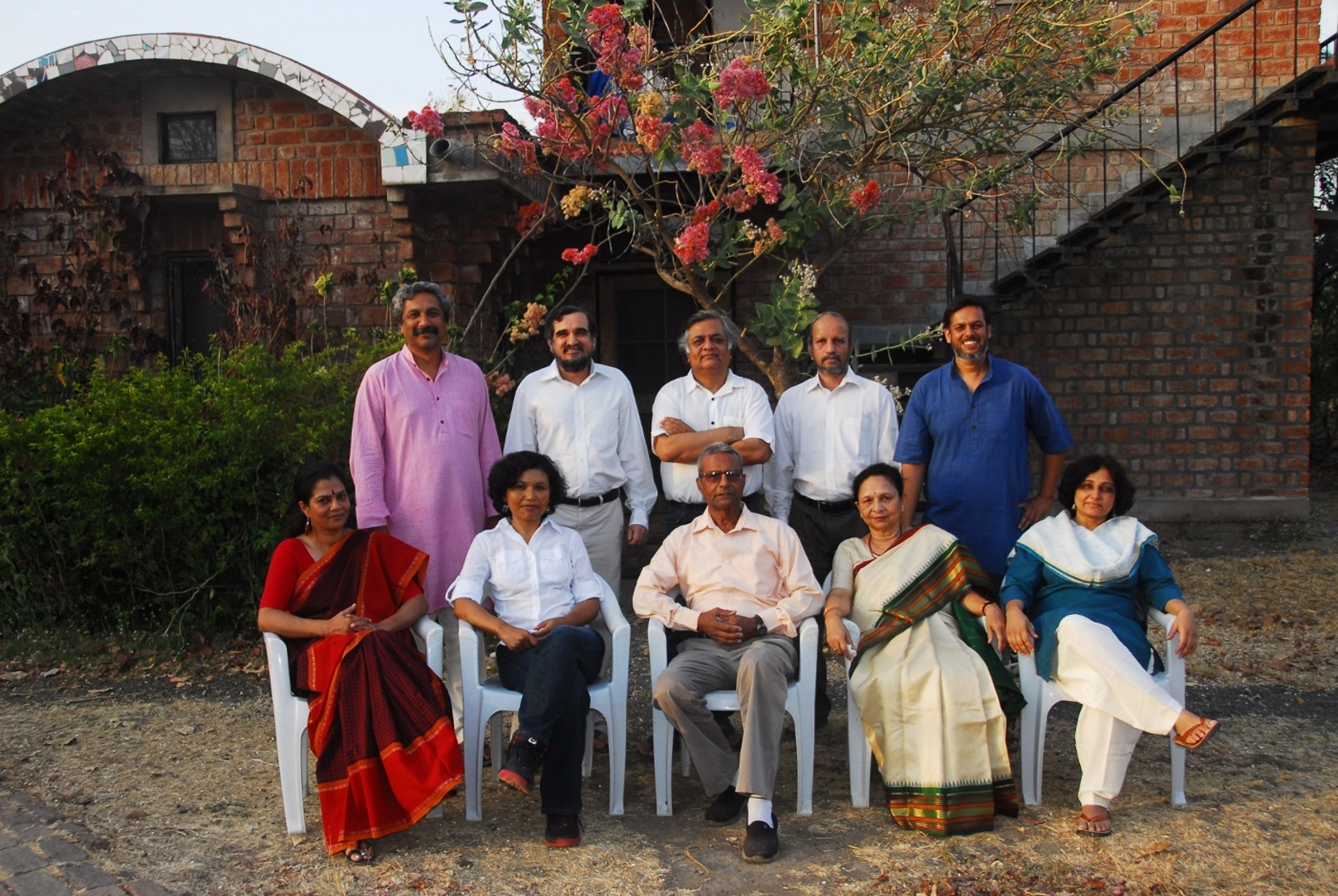
SPS was founded with the conviction that work builds, charity destroys. The founders — academics, scientists, and social workers — left their established careers to live and work alongside the tribal communities of Dewas. Their living connection with rural communities constantly guides the organisation in new directions and gives substance to all efforts. As the Founders' photograph with Baba Amte and Sadhana Tai (1997) testifies, SPS has always been rooted in the moral tradition of those who chose to stand with the marginalised.